2006-05-20

The Sacred Feminine in Cannes

There may not have been much to chew on in Ron Howard’s The Da Vinci Code but there are stronger signs of female power at Cannes making this festival one of the best. First of all there is the veteran actor- the magnifique Gena Rowlands featured in Paris, Je T'Aime in Un Certain Regard and who will be giving a Master Class. Almost everything that comes out of the mouth of this veteran actor is inspirational and provocative:

"We actors do not need to die to be reincarnated, we for that is what we do each and every day. But what freedom! We all have thousands of characters within us. Only actors and madmen (whom we are often taken for) can give them expression and body, and defend them. With complete impunity".
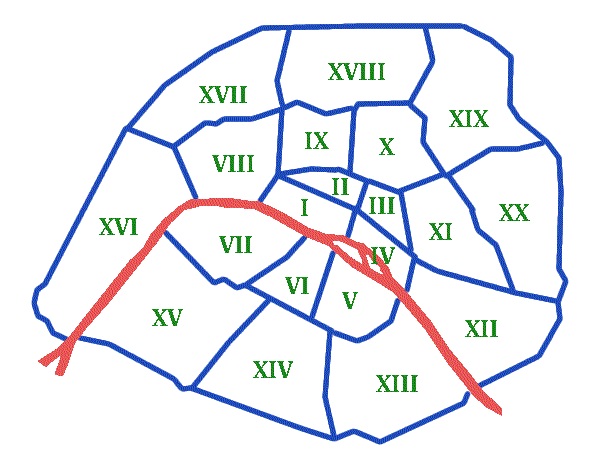
Rowlands remarked how rewarding it was to work on Paris, Je T'Aime, a film made by 18 directors about the arrondissement in Paris they love, especially because of the integration of age spans. We need to know that love exists, she remarked about the role she has in the section directed by Olivier Assayas.

Monica Bellucci who serves on the official jury made a marvellous statement at the start of the festival that we can say to earth pods whey they ask us why we watch SO much cinema :

""If I was not an actress, I would then be a big cinemagoer. I love cinema and I could not deprive myself of movies one way or another. It is through cinema that quality encounters between cultures can take place and their various expressions meet."
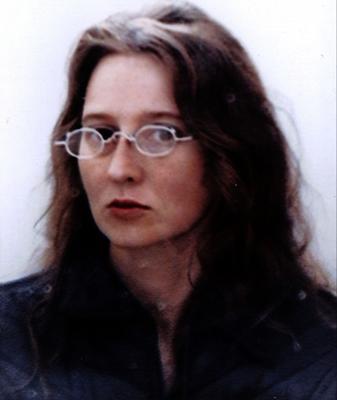
Actresses typically are to be found on the international jury, rarely directors. This year the Argentine director Lucretia Martel is a part of the feature film jury, whose film The Holy One has received international acclaim since its debut at Cannes in 2004. Agnes Varda was on the jury in 2005. Several women have served as presidents of the jury, all actresses: Liv Ullmann (2001) Isabelle Adjani (1997), Jeanne Moreau(1995 and 1975) , Ingrid Bergman (1973) , and Sophie Loren (1966).

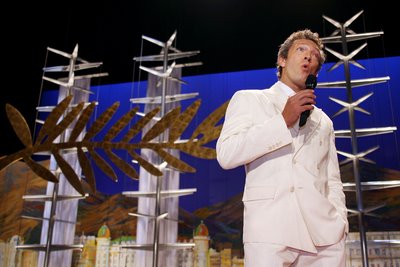
Actresses are typically the "Madame of Ceremonies", - such as Monica Bellucci, Charlotte Rampling and Sophie Marceau but this year in a gender bender, the French actor Vincent Cassell was selected. He heralded the multiculturality of France, adding that in addition to the spiral formed arrondissement of Paris, there are 177 communities!

The artistic director of Cannes, Thierry Frémaux was interviewed by Dagens Nyheter ( 14 May) and declared that each Cannes selection is a global snapshot of the world. "We are not the UN and we don't have quotas. For example, we don't take a film from Sweden that is half good just because Sweden may be underrepresented. Jamais". By the same tack Frémaux said that films by women although appreciated are not sought after. He can put together an entire program without women with no qualms. Although he appears to have no insight into why it might be so he declared, "Men make more films than women, and this is reflected at Cannes". Since we have no reason to expect women selected to the international competition, this year a HOLY TRINITY of female power was selected much to our delight.

Sofia Coppolas's Marie Antoinette is the story of the young Austrian woman who became regent. A period piece is expected from directors with two or three successes under their belt. However, in this respect Coppola has modernized the historical epic, with rock music and an occasional converse footed actor. The film is adapted by the novel by Lady Antonia Fraser, married to that rebel rousing Nobel laureate Harold Pinter. Coppola seems to be keeping interesting company.

Question:
Although it is fiction, of course, what do you make of The DaVinci Code and its suggestion regarding the Holy Grail as feminine icon?

Lady Antonia Fraser: Haven't read it. No plans to do so.

We are also spared from the demise of Marie-Antoinette in new pic! Au contraire the film, like other work by Coppola concerns the pressures of life for young women.

"For me, Marie Antoinette has remained, first and foremost, the symbol of a totally decadent style. I didn't realise to what point these people, who were called upon to govern a country, were in point of fact no more than teenagers. Daily life in the Château de Versailles is also, for these adolescents, a form of apprenticeship set in a tense, difficult environment. It is this position and the complexity of the character of Marie Antoinette which interested me."

Nicole Garcia who served on the Cannes jury with several well made films has been invited to present Selon Charlie, an multi-arc film with seven--and a surprise eight- men. Previous films include Place Vendôme starring Catherine Deneuve who plays an alcoholic that has lost her husband. Deneuve won an acting prize at the Venice International Film Festival. L'Adversaire was shown in Cannes in 2002, the story of Jean-Claude Romand man who murdered his wife, children and parents in 1993.

The Oscar winning Wasp director Andrea Arnold brings us the first part of a dogma inspired trilogy concerning a woman who works in closed circuit television studio in Glasgow: The Red Road. Pic has already engendered enthusiastic acclaim for the international competition for its film form and message. The project is called "Advance Style", where three directors will create films based on the same characters by Lone Scherfig and Anders Thomas Jensen--all set in Scotland.

2006-05-17

Leonardo Who ? or Symbols of the Sacred Feminine

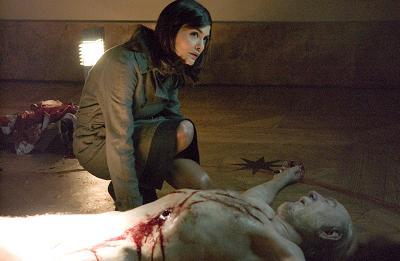
I missed the frenzy around Dan Brown's best seller last year, The Da Vinci Code recommended by a respected Zen Buddhist teacher in Sweden--before all the media frenzy. All last summer my friends spoke about it in Skala Eresssos on the island of Lesbos on my holiday for it takes up how Mary Magdelene may have been one of the disciples of Jesus . I even bought the book which awaits my scrutiny. Tonite, the film adapted from the book will open the Cannes Film Festival. I saw it several hours earlier today. I am glad I saw the film before I read the book. Because as filmmaker Maya Deren declares: if cinema is to develop its own language it must create a vocabulary of filmic images. It should reject horizontal linear development and create vertical cinematic time and space. That said, Ron Howard's The Da Vinci Code is a horizontal potboiler. There are few instances of cinematic magic. Granted there are several teams that worked on special effects , with colorful code names such as Brainstorm Digital, Double Negative, Rainmaker and The Senate. However, there is little to conjure up "sacred symbols of the feminine" even if the mystery concerns tracing theories about the history of Mary Magdelene. Howard said the theme fascinated him because he has a strong willed wife and three daughters. But this is not the theme of this film. Its an ordinary crime mystery saga, like the novel, with lots of detectives, preyed upon innocents and arch enemies.In just the opening minutes of the film I was confronted by the profundity of the following "symbols".
  • Robert Langdon (Tom Hanks) is giving a lecture in Paris. He asks - in English - what certain symbols mean for the students. They answer all too quickly like a cadre of Harvard hotshots, nearly all in English. This does not happen in Paris student lectures. Students are contemplative and take their time responding, however brilliant. Granted in the book these are students at the American University in Paris, but in the film, these are French students, admonished to speak in English. The lecture has changed title from "The Symbology of Secret Sects" and "Ideograms"--to the "Sacred Feminine". The precipice of the film, with little to show for it.Later, Bezu Fache (Jean Reno) of the Paris police, questions Langdon about what the symbols mean on the chest of the dead curator of the Louvre - Jacques Saunière (Jean Pierre Marielle). Right in the middle of a book signing in Paris. This kind of public ventilation of the details of a criminal investigation ----just does not happen..... Then, we only get to hear about 10 seconds of Serge Gainsbourg's La Javanaise (The Javanaise Woman) on the taxi radio when Robert is left off at the Louvre to meet Fache and observe the curator's body. Quel dommage!
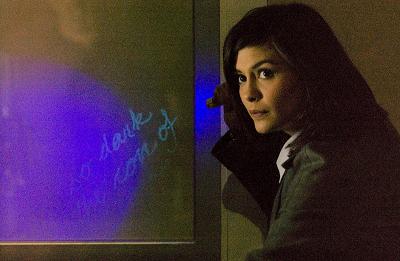
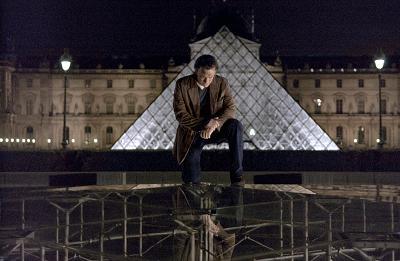
  • History: Sophie Neveu (Audrey Tatou) , a French government crytographer doesn't like history but Harvard professor Robert Langdon (Tom Hanks) says that is because she may not like "her story". Considering the fanaticism around The Da Vinci Code maybe we would like our history better if it were not surpressed and buried. So, who killed her grandfather, the curator at the Louvre. The symbols on his chest and several anagrams and cryptic numbers reveal a story of power in the Christian Church. His death comes after he assumedly reveals the location of the keystone to the Holy Grail to Silas (Paul Bettany), a deranged flagellator - or did he? The stone marks the site of the "best kept secret of the Catholic Church", on the "Rose Line", a Prime Meridian that passed through Paris before the Greenwich Median was established. Hence an old rivalry is evoked of the two neighbors on the English Channel. In order to present the historical arches of Brown's novel several scenes are rather quickly recreated from biblical and early Christian history - including the modern operations of the Priors of Sion, a "secret" gnostic brotherhood, and the ultra-conservative Catholic sect Opus Dei. which includes Bishop Aringarosa (Alfred Molino). To impart a dated feel to the material, these scenes are blurred, including a fuzzy mass of departed souls ascending the steps of the Temple Church in England. The history of Sophie's grandfather, is given ample room. He was one of the Priors of Sion. She was unknowingly groomed as an apprentice until a fallout. But more is revealed. In the end when Robert cuts himself shaving and the blood forms a Fleur de Lis in his Ritz hotel room sink, he realizes that the Rose Line goes from Rosslyn Chapel in England (which took only 40 years to build!) to " the scar of Paris" as Bezu Fache calls it-- IM Pei's pyramid outside the Louvre. It turns out the Holy Grail is none other than the remains of Mary Magdalene, a real threat to the patriarchal order of the Church. This makes sense when we realize how many thousands of women were burned at the stake and executed with the dawn of Christianity and the bloody Crusades. Da Vinci offers us the clues. The chalice or Holy Grail is Magdelene's womb, the vessel of the blood of Jesus, symbolized in the emptyV-shaped space between Mary Magdelena and Jesus in Da Vinci's Last Supper(shown above). Inversely, each V-stripe on the soldiers of military officers is a male symbol, declares Sir Leigh Teabling (Ian McKellan), a Grail scholar, who cunningly use Robert and Sophie for his own selfish purposes in his quest for the Holy Grail.
Further profundities
  • "I never knew a girl whose grandfather gave her a cryptex. My grandfather gave me a wagon". Langdon to Neveu. Lines like these create little chemistry between the two characters and are notable throughout the entire film.
  • Sophie's "grandfather" and "grandmother" indulged in rituals of the Priors where men and women recreate the carnal passion of Jesus and Mary Magdelena. This scene is reminiscent of Kubrik's desparate Eyes Wide Shut when Tom Cruise disguises himself and observes masked men and women in ritualized orgies. Sophie on a surprise visit home as a college girl quickly cuts her ties to her grandfather after witnessing this event. Clipped at the wings in Howard's adaptation is a rich pageant of esoteric knowledge and French history. Beneath every calling card is a better, truer story. Brown may have been sued for plagiarizing the novel, but the information is out there in the public domain for modern tropes, however twisted.
  • Sir Isaac Newton was famous for his scientific inventions but left the ultimate interpretation of them to God. Now that's gravity.
  • Mona Lisa by Leonardo DaVinci is a very small portrait kept under glass at the Louvre and is strictly forbidden to be touched or photographed. Another Leonardo worthy of mention is Leonardo Pisa Fibonacci whose numbers were a roadmap to sacred places, possibly even the tomb of Mary Magdelene, if such a place indeed exists. His numbers were used to calculate immaculate conceptions. In this film they are superficially used to access a Swiss banking vault.
  • The "Fleur de Lis" (introduced in The Da Vinci Code as a pendant left at the Louvre by Jacques Saunière) is the symbol of the Virgin Mary and was used by the Kings of France. The earliest were the Merovingians who established the City of Paris on a vortex point, Rose Line if you will. They also worshipped the goddess Diana. Pont and Place de l' Alma are the sites of underground chambers of worship in her name. Below Place de l'Alma Princess Diana was killed in a tunnel. (Briefly, Ron Howard shows a car ride in a tunnel- and The Ritz where Diana was moments before). The Fleur de Lis is adorned on French churches. The unoffical tour of the Notre Dame de Paris, not sanctioned by the Catholic Church has information with Fleur de Lis prominantly displayed. Hoards of tourists climb the steps to the tower of the Notre Dame. Here if they know what to look for, they will find two languages in stone - one esoteric, such as a statue of an alchemist, a pelican and an elephant and the other Christian, with all the saints and Jesus. At the bottom of the Great Port is a woman-the sacred feminine indeed, holding a book of esoteric and exoteric knowledge, and a series of stone carvings of the stages of alchemy described by Fulcanelli. Secret societies of freemasons and alchemists historically met in the Church honoring these stones. France has a powerful history of esotericism, much carved in stone, and is awaiting cinema for worthy explorations. Ron Howard's The Da Vinci Code does not do it very well.

    2006-04-30

    Udine Far East Film Festival

    The Udine Far East Film Festival ran from April 21-29. See Greencine dispatches for the entire festival. CinéFemme especially recommends Ma Liwen: You and Me, a meeting between an elderly woman who was a soldier and rode horses, and a young university student. The contemplative pace of the film and the female characters are exceptional.

    If the paucity of Asian films at the Cannes Film Festival gets to you, plan on attending this festival. (This year there are 12 Asian films in Cannes, 73 in Udine). Fest catches the Asian films released between Venice and Cannes, and which miss the crosshairs of Berlin. The festival hopes to double the amount of Asian film to the Venezia- Friuli-Veneto region together with the Venice Film Festival. And director Marco Müller was in attendance to give his nod of approval. The festival organizer is of Europe's leading experts in Chinese literature and who saw to it that Hayao Miyazaki came to Italy to accept a Golden Lion for Lifetime Achievement last year in Venice.

    Asian Cannes 2006
    Competition: Summer Palace, Lou Ye
    Quinzaine des realizateurs: The Host, Bong Joon-ho,Yureru, Nishikawa MiwaSepohon Rambutan Indah Kepunyaanku Di Tanjung Rambutan, U-Wei bin HajiSaari
    Un Certain regard: Re-cycle, Oxide Pang Chun & Danny Pang Gwai Wik, Luxury Car, Wang Chao, The Unforgiven, Yoon Jong-bin, Serambi, Garin Nugroho
    Midnight screening: Election 2, Johnnie To, Guisi, Su Chao-pin
    Cannes Classics: Shi Si Nu Ying Hao, Kang Cheng, Kaze No Tani No Naushika, Hayao Miyazaki
    Photograph ©Moira Sullivan


    2006-04-13

    Jane Fonda back in Stockholm

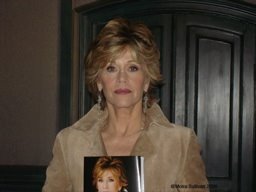
    ©Moira Sullivan
    Jane Fonda was in Stockholm during the antiwar demonstrations against the Vietnam war in the early 1970's. Then in 1989 to promote the film Old Gringo. On March 18-22 she came again to promote her book, My Life So Far, and to introduce a retrospective of her films at the Swedish Film Institute Cinemateque. She marvelled at how Swedish films are paid for by a percentage of the box office, and enthusiastically presented On Golden Pond, the last film her father Henry Fonda made. She starred as his daughter, and recalled some of the problematic issues of their relationship on screen. Katherine Hepburn played Jane's mother who tried to smooth the way between them, both offscreen and onscreen. Both Henry and Katherine won Oscars for their roles and Fonda recalled how Katherine remarked, " you'll never catch me now!"
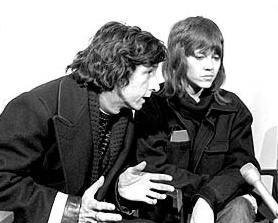
    ©Moira Sullivan 
    A huge crowd of primarily middle aged women filled the Stockholm Kulturhuset to hear Jane Fonda speak about her life and reveal anecdotes that are found in her best selling book, translated into Swedish. The actress was interviewed by Stina Dabrowski, who had visited Fonda in her apartment in Atlanta a few weeks before. Dabrowski chose to ask questions about Fonda's personal life, who is more than willing that people know the intimate details of failed marriages and her own recovery from bulimia and alcoholism. Dabrowski was also asked by Fonda about her own failed marriage, which she declined to discuss.
    The ultra-professional actor revealed earlier at a press conference that she isn't asked to star in so many movies, relating factors of modern day Hollywood production with huge budgets and so much tied into marketing and the demands for instant box office success. Fonda recalled how young actors were given a chance to have their films find a market. But Fonda is certainly in top form in her third act. Should she come to the attention of a European director she wouldn't mind it. Charlotte Rampling, Jane Birkin, Catherine Deneuve and Jeanne Moreau still work, and Jane is fluent in French. But one French director she would never work again with is Jean Luc Godard. She regarded his "generically political" film, made by a Maoist", Tout Va Bien as horrible. Although she enjoyed working with Yves Montand, and highly regarded Jean Seberg's work with Godard, she realized he was using her for his own agenda. When she tried to back out, his "henchman" Gorin physically threatened her. Godard's write off was Letter to Jane, a film she "doesn't have a clue about " as far as what he wanted to say.

    Fonda enjoyed her success in Monster in Law, which she calls a 'popcorn movie', and wouldn't mind a sequel. But she doesn't have the time to produce it, so someone else will have to.

    Regarding her relationship to Sweden she recalled how she came to strategize with antiwar demonstrators in Stockholm in the 1970s. She was proud of the country and the late Olof Palme. Since her visit in 1989 she says revealed that she is feeling much better as "a whole person". Mary Hershberger's Jane Fonda’s War: A Political Biography of an Anti-war Icon illuminates Fonda's work with antiwar resisters during the very unpopular war. The study reveals how Fonda through Nixon propaganda was used as a scapegoat to chastize the antiwar movement. On a personal scale, in My Life So Far , Fonda revealed how antiwar activist Tom Hayden belittled her achievements which ultimately let to their divorce.

    Fonda admitted to having a low profile regarding the Iraq war and said there were others out there now to do the job. Her choice of best film at the Academy Awards was Syriana, a film that was not nominated, though George Clooney won best supporting actor, and she loves his work.

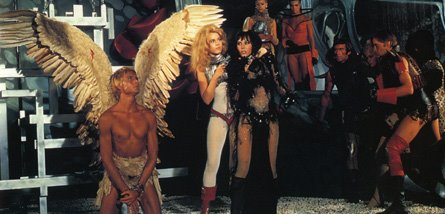
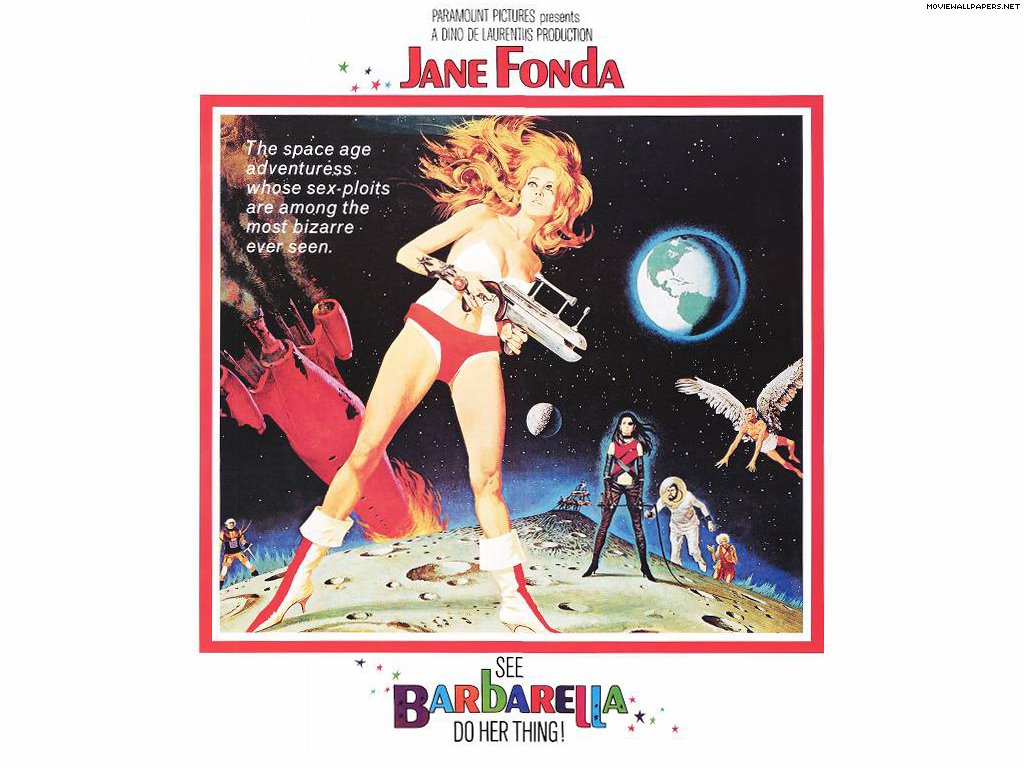
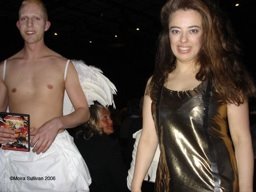
    Two young Stockholm sci-fi enthusiasts, Erik Dalen and Helena Sterner dressed as Barbarella and Pygar came to the book signing dressed up straight from the cult science fiction film directed by Fonda's ex husband, the late Roger Vadim. An astonished Jane exclaimed, but "they didn't have piercings back then", when she noted the adorned chest of the Swedish Pygar. As true
    Barbarellian aficionados, Erik and Helena were well versed in the intricacies of the film. Such as the remarks of "The Great Tyrant"(Brian Jones real life girlfriend Anita Pallenberg) to Barbarella - "Hello Pretty Pretty"? "I didn't like those biting dolls," revealed Helena. "Did you know that the pop group Duran - Duran was named for the film?" "Of course", replied Erik.

    ©Moira Sullivan
    Jane revealed her fantasy of a 21st century Barbarella in neutral Sweden, which she called "liberated territory", acclaiming her peace making mission, then as now.

    2006-03-19

    Jane Birkin at Créteil Films de Femmes

    Jane Birkin is perhaps best known for jumping up and down on David Hemmings bed in Antonioni's Blowup (1966) as a teenage groupie. But when the famous photographer Hemmings plays takes her fawning serious she realizes the game is too rough for her. Later she is to star opposite singer/songwriter Serge Gainbourg in Je t’aime moi non plus (1969) - also a legendary pop hit - and marries him in real life. Jacques Rivette puts her range of acting talents to use in L'Amour Par Terre (1983) opposite Geraldine Chaplin, a three hour spectacle of young actors commisioned to perform theater in the elaborate home of the wealthy Roquemaure. Rolled up shirt sleeves, roomy Manchester slacks and slippers, she exemplifies the finess of androgyny that makes her perfect for roles in films like Kung Fu Master (1987) by Agnès Varda. Now at 60 Birkin has cut a new CD using material from songwriters such as Neil Hannon, The Divine Comedy, The Magic Numbers, Beth Gibbons, and Rufus Wainwright. Fictions will be released March 20 by one of the most versatile Francophiles of the screen.
    Birkin was honored with a special retrospective at the 28th Créteil International Film Festival (March 10-19), sporting what else? Rolled up shirt sleeves and roomy slacks. For the Soirée Gala on March 11th, she selected Jacques Doillon's La Pirate (1984) - a film where she was allowed to play a "plain Jane".

    2006-03-12

    Long before the Oscars were the BAFTA's--and they chose Brokeback Mountain!

    BAFTA's , February 19, 2006
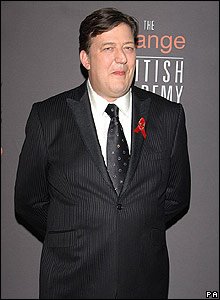
    It was a night of surprises, an excellent, gracious and witty host - Stephen Fry who starred in Wilde (1997), as Oscar Wilde. It was also a night to thank George Clooney for stirring up the political volume in film. The highest honor went to producer Lord David Puttnam behind films like The Killing Fields, and Chariots of Fire,with Ben Cross sitting in the audience. Cross starred opposite Ian Charleson in Chariots of Fire (1981) - a film about "two men chasing dreams of glory" at the 1924 Olympics. Charleson died of AIDS in 1990. Putnam applauded the work of George Clooney for themes that had changed the industry in a year – probably the best accolade of the evening.

    But above all it was a nite for Brokeback Mountain--best script, best adapted screenplay , best supporting actor.

    "Its not a gay cowboy film", quipped the producer of Brokeback Mountain upon receiving the award for best film. "Its a gay shepard film!" Jake Gyllenhaal got his just rewards for best supporting actor. Jake reports in Premiere last month how hard it was to initiate 'the intimacy' in the film, but not when Ledger and he were wrestling. After all sports are perfectly acceptable homosocial encounters - for spectators and players alike. Observe the fascination for the Olympics. So, if 'love is a force of nature', as the film poster states, why not nominate both actors? The Brits did!

    Fry's jokes went over well, many about the handsome men in the room and on stage. The awards ceremony was polished and intelligent. Tributes to people in the industry who had passed away was very well made -- with clips from films of among others, Shelley Winters, Sir John Miles and Richard Pryor.

    Wallace and Gromit: the Curse of the Were Rabbit won best British film. The Constant Gardener, nominated for ten awards took home one award. The awards caused a stir the next day, how can we not reward our own? Not realizing that is exactly what Hollywood would do a couple of weeks later. Cheers to the Brits!

    "I'm not a lesbian but my girlfriend is...."

    Biopic on the late vocalist Dusty Springfield in the works, directed by Ang Lee. Charlize Theron will be cast as Springfield and opposite, as the PR goes, Springfield's lesbian lover Kate Moss. So what does that make Springfield? Remember that T-shirt "I'm not a lesbian but my girlfriend is". Here we go again. Marketing for an Ang Lee film about what it's not about....
    Springfield biopic
    Ang Lee's new film cast