Showing posts with label Moira Sullivan. Show all posts

2026-05-11

Je t'aime... Moi Non Plus and Brigitte Bardot - to be honored at 79th Festval de Cannes


Brigitte Bardot, Plage Macé 1956

Je t'aime... Moi Non Plus
, a song Serge Gainsbourg wrote about his love affair with Brigitte Bardot, is a metaphor for Bardot's relationship with popular culture and its custodians, specifically the press and paparazzi. In her later years, she expressed her desire to live to 100 but sadly passed away at the age of 91. She is best known for establishing an animal foundation, Foundation Brigitte Bardot, sacrificing all her possessions to make it a reality. Her impact on animal rights was profound, as she vehemently opposed the slaughter of animals in the name of religion or holiday tradition. Despite speculation, she was a supporter of LGBTQ individuals, such as Maria Schneider, who shared her life with another woman until the very end. Maria admired Bardot for gracefully transitioning from acting to a successful career as a singer-songwriter to an animal rights activist. However, Bardot's life and achievements were often distorted by the media, which fixated on her controversial film roles. In her iconic role in "And God Created Woman" (1956), directed by Roger Vadim, Bardot captivated audiences with her mesmerizing ethnic dance (mambo) in a nightclub accompanied by Afro-Caribbean musicians, shedding light on societal repression of male sexuality and private ownership of women. Tragically, in a scene from "A Very Private Affair," (1962) she falls to her death in slow motion after being startled by a photographer's flash. Bardot will be remembered for her pioneering efforts in women's liberation, her advocacy for animals, and her enduring contributions to the arts and culture.

The city of Cannes is set to rename the Plage Macé in honour of French film icon Brigitte Bardot, who died on 28 December. The beach below the Palais des Festivals will be open to dogs November 1 - May 1 in honor of her animal rights activism. 


Special screening in the presence of Nicolas Seydoux, President of Gaumont, MAY 18th, 2026
VIVA MARIA !

Louis Malle
1965, 2h02, France / Italy

In a Central American country called San Miguel at the beginning of the 20th century, Maria I and Maria II meet, forming a theatrical duo before embarking on a revolutionary struggle. A surprising variation on revolution, blending comedy and western, starring Jeanne Moreau and Brigitte Bardot.
This screening is co-organized with the City of Cannes, whose mayor David Lisnard will unveil a plaque on Macé Beach in honor of Brigitte Bardot.

-- Dr. Moira Sullivan

2025-04-26

Tapescripts Annakarinaland

JUNE 16, 2024 Second Broadcast

 This is Annakarinaland, and I'm your host, Moira Sullivan. San Francisco film

critic and scholar. Annakarinaland is broadcast on Saturdays at 10 p .m.

with a focus on women and film with interviews, film reviews, and festival reports.

Music:

Sorcerer - Stevie Nicks, Sheryl Crow.

"I'm tired, I'm thirsty, hey,

I'm wild -eyed, in

♪ Yeah, yeah ♪ ♪ Timeless ♪ ♪ In your final rehab ♪ ♪ It's a high price ♪ ♪

For your love to rehab ♪ ♪ Sister Ruth ♪ ♪ Who is the master ♪ ♪ A man and

woman on a star screen ♪ ♪ In your finale In the middle of a snow dream So I

surrender, show me the highlight

Come on over, let me put you on night Alright

♪ Lady from the mountain ♪

I'm tired,

I need you badly, I'm wild -eyed In my misery,

yeah yeah I'm timeless When your finally hate Oh,

it's a high price For your luxury, yeah yeah

Just a run, who is the master?

Man and woman on a star screen In the middle of a snow dream Just a run,

show me the highlight

I'm all over

♪ Put you on a

game, darkness ♪

Won't you tell me who I'm bad?

Baby, don't look

♪ Won't you tell me who you are ♪

(upbeat music)".


You've been listening to Stevie Nicks and Sheryl Crow in "Sorcerer." 

For the second

broadcast, I will look at two films by Belgian filmmaker Chantal Ackerman, A

filmmaker of great importance in the world of women and cinema. A filmmaker who

would have been 74 on June 6th. She was a teacher at City College of New York in

filmmaking, so we'll look at her film Jeanne -Dielmann with Delphine Serig,

and if you've never seen it, it's time, from 1978. Which helped finance her next

film from the the same year, Rendez-vous d'Anna, The Meetings of Anna, with Aurora

Clément. After that, we'll return to the 77th Cannes Film Festival that I just

returned from, where I will report on Out of Competition Furiosa by George Miller,

starring Anna Anya Taylor. And the show tops off with a review of The Red Shoes by

Michael Powell, based on a fairytale by Hans Christian Andersen and starring Scottish

actress Moira Shearer.


 Next up will be a short compilation homage to my sister Monica

Sullivan following a tribute that was heard in the first Annakarina broadcast on

June 8th Monica for 30 years was an independent voice in community radio. She hosted

two shows, which are featured on Saturdays for KXSF from 10 a .m.

to 11 a .m. Movie Magazine International, a 30 -minute entertainment program that looks

at films with interviews with directors and actors and festival reports in the San

Francisco area and around the world. Movie Magazine International broadcasts classic

programs from its 30 -year run that you can still hear in the U.S. and in the U.K. on KXSF. 

And Shoestring Radio Theater, sent from all over the world that are

produced by a team of actors and playwrights, and engineered by Steve Rubenstein,

the producer of Movie Magazine and Shoestring Radio Theater, Monica's husband. His

compilation contains the many voices of Monica Sullivan. Take it away,

Monica. 


"Good evening. You're listening to Shoestring Radio Theatre. What's the

matter? Anyone would think you loathe the side of me these days. This time,

we're going to visit Tracy and Chris. We're trying to sleep after watching the late,

late movie about a homicidal eight -year -old girl named Rhoda Penmark. Won't you come

in and have tea with us? We've been away in England the whole year. You know my

husband and I would love to see you again. There now, it's all right.

It's all right, Andy. I'm here

Mr. Hildebrand, do you realize how grateful some children would be to eat that

apricot pie? Well, you take my word for it, Mr. Hildebrand. This spy might mean the

difference between life and death in certain parts of the world. Live things in much

fresher than dead ones, and you humans eat all sorts of dead creatures.

While they pick on her, your precious Harold Hung isn't exactly finding a sister -in

-law off with a whip. No, I am a queen. I do not perform tricks.

Nya -nya -nya -nya, come and get me - screw!

In alliance with the President's Commission on Health, I've decided to initiate the

most advanced nutritional regime available. As of 0700 hours,

all inmates will be duly placed on the newly established dietary standards inspector

ah then Mr. Ide's in trouble. What's he done now of course, it is going to be

select your house; it is really one of the few houses in London where I can take dear

Agatha I've noticed the dear sisters, your precious jewels shall be returned to you

just as soon as one of our three master loo's can correctly deduce who stole the

diamond and just where it is hidden.

How could I ever forget you? You broke my heart Oh,

these years ago.

Only a very naive person could possibly be shocked these days.

Mr. Vargas, any more outbursts, and I will hold you in contempt of court.

Dump him. That's my feeling. Put this guy out with the trash and paint a big red

P in the middle of his fat forehead while you're at it"

Hello everybody,

I'm Monica Sullivan. Welcome to issue number 940 of Movie Magazine International."


Those were the many voices of Monica Sullivan-- radio journalist, radio host,

San Franciscan writer, historian, chronicler.  We will miss you Monica,

but you're here all the time with us on the radio waves.

Support for KXSF is provided by Rainbow Grocery, a worker -owned cooperative that has

been serving San Francisco vegetarian food and providing a model for sustainable

living since 1975. Rainbow is located at 1745 Folsom Street.

Visit them online at rainbow.coop. KXSF would like to thank Rainbow Grocery for

its continued support.

Singer -songwriter François Hardy died on June 11. She was born in Paris in 1944.

And her debut was in 1962, on the show "Salut les copains", "Tout les garçons et

les filles", "All the girls and the boys" became a breakthrough hit. With her

soulful lyrics, she was a beacon for disillusioned French youth. She wrote in this

song, "Without joy and full of ennui, when will the sun shine for me, like the

girls and boys of my age?" I asked, "When will my day come, the day when my soul

is no longer in pain. Hardy is considered one of the top 200 singers of the world

by Rolling Stone magazine.


"On nage, ça veut bien ce que c 'est qu 'être heureux Qu 'est -ce que les yeux dans

les yeux Qu 'est -ce que la main dans la main Il sent bon,

amoureux, sans peur du lendemain Oui mais moi,

je vais seul, par les rues La m 'empenne, oui mais moi,

Je vais seul, car personne ne m 'aime Mais jour comme minuit

Son temps tout point pareil

Sans joie et plein d 'ennui

Personne ne m 'a Personne murmure "Je t 'aime à mon orêt" Tous les garçons et les

filles de mon âge font ensemble des projets d 'avenir Tous les garçons et les filles

de mon âge savent très bien ce qu 'ils m 'éveillent Et les yeux dans les yeux et

la main Dans la main, ils s 'en vont, amoureux,

sans peur du lendemain Oui mais moi, je vais seul,

par les rues, l 'âme en pleine Oui mais moi, je vais seul,

car personne ne le mène Mais je ne ferai Comme mes nuits sont en tous les points

pareils

Sans joie et plein d 'ennui

Au pendum pour moi, brillera le soleil Comme Les garçons et les filles de mon âge

prenaient très bientôt ce qu 'est l 'amour Comme les garçons et les filles de mon

âge me demandent quand viendra le jour Où les yeux dans ses yeux et la main dans

sa main J 'aurai le carreur sans perdu l 'endemain J 'aurai le jour,

je n 'aurai plus du tout".


When Chantal Akerman made Jean Dielmann, 23, quai commerce, 1080 Brussels in 1975, she 

was only 24 years old.

The road to making the film began with contacts. And one of them was French

filmmaker Babette Mangolt, currently a professor of visual arts at UC San Diego,

who wound up doing the cinematography on this film. Akerman and Mangolt met in New

York, a city that would later become the young Belgian director's at home. Mangold

introduced Akerman to experimental filmmaking, a small and exclusive world she loved.

Success came early to Akerman whose film was selected for the Cannes Film Festival

Directors Fortnight in 1975. Suddenly, fifty international festivals wanted to screen

it. It starred a brilliant French actress, Delphine Seyrig, as a housewife and widow,

who stayed at home to take care of her teenage son. Once a week she solos as a

prostitute for one of her regular clients. Of the film, Akerman said she wanted to

value the rare subject of a housewife whose ritualistic work is at home.

She has said that a woman almost certainly would have had to make the film, since

a man barely pays attention to his wife's work at home. To that extent Akerman

does a meticulous study of the daily motions of Jeanne Dielmann, and as she later

explains, the film was based on watching the routines of her mother at home,

a survivor of Auschwitz, whose parents died in the camp. Jeanne Dielmann is two

hundred minutes long, and is a fascinating film, which breaks down and

compartmentalizes Jean's various chores and activities, such as putting coffee into a

thermos, boiling potatoes, shining her son's shoes, making up his bed,

or putting the money from her clients into a large cupboard dish in the living

room. Each day the routines are shot and the procedures give an extraordinary

importance. This is especially because of Akerman's framing of the kitchen and the

hallway, an almost claustrophobic environment where we as spectators engage in Jean's

activities. We are forced to acknowledge how the order is exact and strictly kept in

Jean's schedule. We notice how Akerman is careful to present the one day when Jean

has some time to think for a bit, unlike previous films, and the film changes its

trajectory. This is the compelling force of the film that remains an intanting

narrative construction to this day. Chantal Akerman died in October 2015 at the age

of 65. Her final film was on her mother, No Home Movie.

On June 6th, it was Chantal Akerman's birthday, and she would have turned 74.

We'll return in a minute with another review of one of Chantal Akerman's films,

"Rendez-vous d'Anna, Meeting with Anna".


"Mère, mon carpèze détourne et mon corps se rendonne si léger à la mer La mer

pleure, c 'est vague, qui ont un goût de l 'âme et son vent est faim

Se perdre en la terre,

se fondre à la terre

Mais, magique d 'origine dans son rythme essentiel Le ventre de la mer Au cœur pour

vous jeter dans un mur des séchers Qui n 'est fait que de terre Où je n 'ai jamais

Sur ce qu 'il faut faire Et

la vague dans ses jours puisse briser Et la mer toute à coup devient grise Mon

amour est si lourd à porter

Je voudrais doucement me coucher dans la mer Magique originelle dans son rythme

essentiel Je voudrais que la mer me reprenne pour honnête Ailleurs que dans ma tête,

ailleurs que sous le terre Pour son amour

You've been listening to another song by François Hardy, "Mer". 


French actress Aurore Clément was the guest of honor at the Creté International Film Festival i

n 2015.

In many ways Clément defines the film, whereas Chantal Akerman's Jean Dielmann is

considered the late director's best work, Le Rendez -vous d'Anna would likely be second.

In many ways Clément defines the film with her particular gait and presence in front

of the camera. At the face -to -face, she still has this exactitude and her evocative

and graceful persona. The movement of figures within the frame is one of the

components of mise en -scène, and Akerman uses this technique brilliantly. As with

Dielmann, the mise en -scène, or composition of the frame, is rigidly structured for the

direction and artistic intention of the narrative. narrative. Whereas a director like

Alfred Hitchcock is known for a strict adherence to the mise -en -scène, often to the

detriment of his female characters, such as icy blonde meltdowns typified by Tippy

-Hedren in The Birds, Kim Novak in Vertigo and Janet Lee in Psycho,

Akermann uses this space to accentuate women in three dimensions. Anna is one such

character who fills every scene and in almost every one of them her sturdy brown

pumps define space and sound. Where she goes, the camera goes,

and the sound of her shoes tells us something about her. 

The philosopher Helene Cixous wrote about "Ecriture Feminin" in her essay The Laugh of the 

Medusa (1975),

I asked Chantal Akerman on a visit she made to Stockholm about the fact that the

meeting Anna has with women is the only time in which she is allowed to speak.

She said that she hadn't planned it but added that it was not intentional, with a

smile. Nevertheless, nearly forty years later it is clear that Anna's inner language

is spoken to women. Through most of the film, Anna listens as men and women speak.

But there is a difference when she listens to women. For them, she is emotive.

Tears fill her eyes. Something stirs in her. That does not, in her one -sided

conversations with men. In Rendez-vous d'Anna she has more to say to women, because they

do not talk to her, but to her. This includes her mother, played by Lea Massari 

and her old friend Ida, played by Magali Noel. When she says no to a suitor,

Henrik Schneider, played by Helmut Grimm, she also says no to boredom and a

bourgeois life. When she seems to say yes to Daniel, an indifferent suitor, played

by Jean -Pierre Cassell, he turns his back to her, or turns on the radio. Ackerman

freely uses the arches or facades of buildings to place her characters.

Who for the most part are in hotels or train stations. Trains and train tracks are

prominent and artistically arranged, evoking sounds and compromising images in the

film. Anna is a filmmaker on the road who travels to meet with publicists, leaders,

friends, family, or lovers. On the way she has erotic encounters. The figures within

these buildings do their duties in a repetitive fashion. Maids turn down the beds or

strip them of bedsheets, blank -looking clerks, check messages or reservations.

Ana realizes her own boredom and emptiness when she arrives home and walks through

her apartment, and the fridge is only a bottle of water. The echo of her pumps are

heard through the apartment, devoid of anything but function. In her bed,

as she listens to her messages on her answering machine, she realizes her lack of

connection to the world and to others. The 1978 film shows its dates with a

terribly modern looking but nonfunctional TV with push buttons and a large answering

machine that is situated underneath the telephone in Anna's apartment. All calls are

made in phone booths, telegraph offices, or hotel rooms. There are no cell phones or

computers. We're Anna to be young today. Would you feel less empty with the

predominance of social media and smartphones?

I was in an elevated seat when I saw Mad Max Fury Road in Stockholm in 2015 and

it had all of the elements of a roller coaster ride. I'll never forget the ecstatic

feeling I had watching the momentum of that film. And then we had the brilliant

editor Margaret Sixel, maybe she was the one that was responsible for the many

mothers mythology. I remember a professor at San Francisco State where I attended

film school about Sally Gerhard Miller. She wrote a book called The Wanderground,

an enchanted story that was really very precious to the women's movement of the

1970s. It was about what was going to happen in the future to women, that we were

going to wind up as breeders and that's exactly what the Fury Road film was about

This mythology is not in the new prequel. The Australian director decided to cast a

younger Furiosa as he couldn't make Charlize any younger. The prequel seems

to have a more polished look compared to its predecessor with modern and updated

elements the  Mad Max franchise has certainly gotten beefed up. The film lacks strong

female characters with Furiosa, the only female besides her mother, Mary Jobasa.

The Vulvalini with the Valkyrie and the Keeper of the Seeds have been replaced by

Chris Hemsworth and his wife, Elsa Potaki, doubling as a Vulvalini general and a

biker. The storyline leaves out important details about Furiosa's background and the

world she inhabits. Overall, the film raises questions about the portrayal of strong

women in cinema. The five rides are missing, and instead we get the dominating

Dementus, played by Chris Hemsworth, who symbolizes why this film is not a prequel

to the character of Furiosa, but bifurcates her legend and posits a new narrative.

I am not interested in this story, and we were promised a prequel—a Furiosa.

This is how female legends are often usurped by male characters. The film kicks off

with Mary Jobassa as she attempts to rescue her daughter from Dementus. Then suddenly

she is not in the film anymore, or the Green Place, or the many mothers. I booked

my ticket to Cannes the second I learned that Cannes was screening the prequel. The

thing about opening night is that the new film reviewers, such as IndieWire,

come in with their Apple Watches to time how long the standing ovations are for the

films. Nobody ever did that before, but they're doing it now, and it is no

indication of the film's worth. But, being with the actors in the same room, it

gives the wannabes who are star worshipers the feeling that they're one and the

same in this film creation. It must be very exciting for them, of course. While

Theron may not have resettled her younger self; this trope of de-aging for Furiosa

requires a better narrative, not the creation of a new character, for her warlord,

Captor. Chris Hemsworth takes up a significant portion of the film and overshadows

Furiosa whatever they are together on screen. Furiosa's art direction and set design

alludes to potentially a better film than its predecessor, with everything appearing

fresh and polished, yet Mad Max is a saga after the Apocalypse,

where everything is sour and poisoned from the human body to the water, air,

and earth. Oscar -winning editor Margaret Sixel, editing of Fury Road was a

masterpiece of intricate camera angles with match cuts, and continuity editing

especially when applied to fight scenes, and the mobile Armada of old vintage cars,

Polk hats swinging from one car to the other, and the blind guitarist Coma Doof

Warrior. A bold touch from the creators of Mad Max was that this warrior is wearing

a mask made up of the skin of his dying mother. There are a lot of mother

metaphors in this sequel film. Immortan Joe, played by the late Hugh Keesburne in

the 2015 film is replaced by a younger, tamer, less dreadful, and domineering

character, which is probably why they felt that the role played by Chris Hemsworth

as villain was all that was needed. And it felt anticlimactic to see,

for example, the people -eater and the bullet farmer. The absence of women in

speaking roles is noticeable, especially in a time when films featuring strong female

leads are more prevalent. Anya Taylor -Joy delivers a strong performance, but her

character still feels overshadowed by the men around her. The absence of Mad Max is

also felt as he has been a central figure in every other installment, and in this

film only has a cameo. Anya Taylor -Joy's stoic portrayal may be intentional, but it

doesn't necessarily make her character more powerful. The lack of emotional range in

her performance is noticeable, despite a standout scene of rage that she explained

she stood by with the character that has been known as the Praetorian, warrior

woman, and the Imperator. The many mothers have also been stripped down to nothing,

and they were a strong handful, and Fury wrote, "Our babies will not be warlords.

We are not things," were the adages of images of the wives. I wish I could say

more about Furiosa, but as it stands now, Charlize Theron is the ultimate Imperator

and will forever be. She did not have to become younger for this film, for she is

eternal.


[Music]


"Even if I feel the sun on my skin Every day,

if I don't feel you If

I see the most beautiful things Up in the sky, if I don't see you,

take me, Oya take

me, Oya, take

me, Oya,

take me, Catch

the wind, catch the clouds, if I don't see you Listen

to my skin every day, If I don't feel you Take me oh yeah

Take me Oya

Take me Oya

Take me oh yeah

take me oh yeah

take me oh yeah

take me oh yeah...."


You've been listening to the the French Cuban duo Ibeyi Naomi and Lisa-Kaindé Diaz 


Advertisment

"Drawing from his life work absorbing the vast terrain of all recorded music. Each week, Gage 

Kennedy expertly curates bespoke programs which lean rock but reveal connections between 

genres, eras, continents, and cultures. Plus, he always includes long sections that sound like

an old motor sputtering or ominous crackly metallic static. It's off the hook.

Fridays, one to four on KXSF LP 102.5. "


The Red Shoes connects me, my sister, and my parents in a special way. My parents are San

 Franciscans. My sister, Monica Sullivan, was born in Visalia approximately 227 miles from San

Francisco. But during that time, my father worked as a youth parole officer in

Alameda while my mother taught at elementary school in Berkeley. The story goes that

one day my parents ducked into a movie theater to escape the rain and saw the red

shoes. They were so impressed by the character, played by Moira Shearer, that they

decided to name their next child after her. However, my name has the American

pronunciation, not Celtic. Monica went to Boston with my parents,

where my father continued his studies at Boston College, and my mother reconnected

with relatives on her father's side. Soon after I was born in Boston on Symphony

Road, a street that was involved in a scandal when arsonists set fire to the

apartment building in the 1970s, the Symphony Road arsonists that made national news.

Later, we all returned to San Francisco and lived in Park Merced. Michael Powell and

Emeric Pressburger, The Red Shoes, based on a fairy tale by Hans Christian

Andersson, is about a ballerina who comes under the control of an obsessive director

who tries to mold her career into his vision. He also tries to prevent her from

marrying the man she loves, which results in a tragic end. The film opened in major

film festivals in Venice, Cannes, Berlin and London, and was released in 1948,

afterward receiving two Oscars for our direction and musical score. Moira Shearer

plays Victoria Page, who dreams of becoming a prima donna ballerina, and whose goal,

like many dancers, is to get noticed by the head of a prominent ballet company.

Anton Walbrook plays the arrogant director, Boris Lermontov, who treats the women in

his ensemble horribly, especially if they have any romantic pursuits. The young women,

who aspire to be the best, fall short, according to Lermontov, because if they are

not married to their art, they are failures. The pressure on being great for him

compels him to treat his ensemble like machines. Rather than people, and his

obsession with creating the greatest dancer is for his own reward with little

attention to what consequences this may have for the people who esteem him as a

great director. Victoria watches this happen to her colleagues and then it happens to

her. Not only does Lermontov have eyes on Victoria but also the ambitious composer

Julian Craster played by Marius scoring. However,

when the two of them fall in love, he is bent on breaking them apart. The film is

shot in Villefranche sur Mer, where the company is touring. It is during this time

that Victoria realizes that she can't live without Julian and runs after him.

While making a giant leap nearer Cannes at the train station, she falls on the

train tracks and will never dance again. Though it is the red shoes of the ballet

she wears that seem to have a life of their own. Her momentum is motivated by love

towards Julian and away from Lermontov. The Scottish actor Mauritius is performed as

exceptional and it is the role she is most remembered for in her screen career.

However, her primary career was to the ballet. The Blu-ray second DVD edition of

the Red Shoes contains a special section with Martin Scorsese about the restoration

of the film. The digital version is an HD digital master of the restoration by the

UCLA Film and Television Archive and Film Foundation. This work began in 2006,

the year that Moira Shearer died at the age of 80 and was completed in 2009. The

film premiered at the Cannes Film Festival that year. Here now is the extended

version of the Red Shoes ballet by Brian Easdale.


"(upbeat music)

(dramatic music)

(dramatic music)

(upbeat music)

[MUSIC]

(dramatic music)

(upbeat music)

(upbeat

music).

For Annakarinaland, this is Moira Sullivan. Thank you for joining us.


Advertisement

Support for KXSF is provided by Rainbow Grocery, a worker -owned cooperative that is

conserving San Francisco vegetarian food and providing a model for sustainable living

since 1975. Rainbow is located at 1745 Folsom Street.

Visit them online at rainbow.coop. KXSF would like to thank Rainbow Grocery for its

continued support.

2019-07-31

Katherine Hepburn in 'Summertime'

Summertime

Summertime

David Lean
UK1955
Review byMoira Sullivan
Posted on11 July 2004
SourceHome Vision VHS
Summertime was shot exclusively in Venice. And for those who have been to Venice, the film is a rare treasure; an historical homage to a city once enamored by tourists, with very few cameras, and mostly well dressed Italians. Today the dress is more casual, and the deluge of international tourists milling around removes a part of this floating museum with every step.
For David Lean, it was his favorite film starring his favorite actress. In her autobiography, Me, Katherine Hepburn remarked, “they called me and said that David Lean was going to direct it. ‘Would I be…’ they didn’t need to finish that sentence.” Hepburn said she first lived on the island of Murano, where the famous Murano glass is made, not Venice proper with its maze of narrow streets and bridges. Together with her entourage, she quickly moved into an apartment near the Grand Canale, the major water route, opposite the famous Gritti hotel where David Lean camped. (She even had her own gondola.) One of the most sought after Venetian tourist items is of course Murano glass: “glass, glass and more glass,” according to the dialogue. Given that Venice footed the entire bill of $36,000 for the film, Summertime is seen as pure tourist promotion.
Summertime is about Jane Hudson (Hepburn), a middle-aged “fancy secretary” from Akron, Ohio who saves up for a three-week dream vacation in Venice. Arriving by train to Piazza Roma via the Orient Express, Paris-Venice, complete with a hand-wound 8-mm camera, she takes the vaporetto, the public water bus rather than a gondola or water taxi. An American couple on board happens to be staying at the same boarding house, Pensioni Fiorini on the Accademia water bus stop (the Peggy Guggenheim home is located here). Jane coyly indicates to the pensioni proprietress that she, like most girls under 50, is searching for something. On her first day out on the Piazza San Marco Jane meets a handsome middle aged man, Renato Di Rossi (Rossano Brazzi), an antique dealer, and enters into a romance which becomes all the more passionate because he is married although separated.
Lean had six shades of red goblets blown especially for the film. In one scene, Jane discovers Renato charged almost the same amount for 18th century glass as fresh imitations, a discovery that produces rage. It becomes quite clear that Jane is losing her rocker, displaying a passion that eclipses the bravura of Brazzi. She is hysterical, insisting people drink with her to quiet her loneliness, and has flash floods of intermittent tears. Hepburn actually had problems with Spencer Tracy and the film crew, despite the glass commercials, and she was considered an irritating obstacle to tourism.
Lean’s intention with the film was to capture a child at play: Jane’s awe of Venice and the excitement of new love. An Italian child becomes her escort, one that she at first rebukes — she is not that desperate, but she and Renato later play with wind up toys at a café. “You are like a hungry child that only wants beefsteak not ravioli. Please take the ravioli,” says Renato when she starts to question the affair. “I’m not that hungry,” says Jane. But Renato convinces her of the need for a Latin approach, “the ravioli approach” to love and sexuality. Her red goblets transform to a pair of sparkling red shoes, noticeably evocative of Dorothy’s ruby slippers, as fireworks fills the sky. The charm of Venice and typical Italian love songs give the film the aura of a melodrama, a woman’s weepie, but the storyline is too thin. The film also prods American and Italian stereotypes, such as the shock of promiscuous Italians to the more pristine Americans. (Keep in mind the film has a British director.) The travelogue veneer and the superficial story make Summertime a corny gem.
Hepburn claims Lean absorbed the city and had a photographic gift for conveying his impressions. Indeed, after every minute of dialogue a breathtaking view of the city is displayed, drawing inspiration from the play The Time of the Cuckoo by Arthur Laurents, which is made to fit his pictures.
In one memorable scene Hepburn falls into the Venetian canal, an action that would be repugnant today in the foul water, filled with industrial pollution from neighboring Maestre. Reportedly, the water temporarily blinded Katherine and today anyone who falls into the canal is advised to take antibiotics. Medieval Venice was built on pilings and dead bodies were dropped into the canal to rot. A foreshadowing of the duplicity of the canal occurs when Jane first sets eyes on a gondola floating by, a view tainted by the dumping of sewage from an apartment. It is the also the water that carries her first flower from Renato, a flower that never quite stays in her possession even as she pulls away from the city. “Please help me Renato,” she begs, “let me go.” She has grown up, and if she stays a second longer she will never go. Brazzi actually first interpreted his role as a gigolo, (“another girl will arrive tomorrow”), a portrayal Lean thought too grim.
In the UK, the film was called Summer Madness. It is a far more appropriate title.

2016-06-24

Frameline 40 Film Fest nears festival and Pride month end

Frameline 40 Film Fest nears festival and Pride month end
The Ovarian Psyco Brigade

The Frameline Film Festival is in full swing through the end of Gay Pride month that culminates in the Pride Parade on June 26 in San Francisco. The LGBT event features narratives, shorts and documentaries from around the world, and prides itself on taking the best films out there from this world. It is an eclectic pageant with films about gay men, lesbians, transgenders and bisexuals.

There are 55 about lesbians this year, which mostly share a low budget profile, but for lesbians at the Frameline Audience, it doesn’t matter since the authentic voices of the community are more important than artistic content or cinematic innovation. What matters most is authentic representation and the films for this weekend have that stamp of quality.

The Bay area premiere of AWOL directed by Deb Shoval is based on an award winning short story- a film set in rural America about a chance meeting which goes beyond being a summer fling. An incongruent couple fill the narrative arc in a relationship between high school graduate Joey and Daisy Dukes, a woman with kids and a truck driver husband. The film screens June 25 at Landmark Theatres in Piedmont.

Also on June 25 at the Castro Theatre is a screening of four shorts concerning lesbian friendship, dating, and cross cultural meetings - Sticky Fingers - One Last Night Raniya, Arrivederci Rosa, and Sticky Fingers. The films are invigorated by excellent sound tracks. At the screening director Sidsel Møller Johnsen and producer Niels Wee of "Rainya" will be in attendance.

At the Roxie is a cinematic extravaganza "Ovarian Psycos" on June 25 and directors Joanna Sokolowski and Kate Trumbull-LaValle will be in attendance. The film is a documentary about twenty plus young women of color who bike through the streets of East LA with black bandanas emblazoned with white Fallopian tubes over their faces - "The Ovarian Psycos Bicycle Brigade". Their mission is to protest violence against women. The bikers echo the "Women's Army" in Lizzie Borden's cult classic "Born in Flames "(1983)shown at a previous Frameline Festival (2007). In a cameo role as a feminist newspaper editor is future Oscar winning filmmaker Kathyrn Bigelow. "The Ovarian Psycos Bicycle Brigade" was founded by poet M.C. and activist Xela de la X and is composed of cisgender and transgender women who protest misogyny and racism and honor the legacy of the Chicanx civil rights movement.

On Saturday is the annual "Fun in Girls Shorts" and "Fun in Boys Shorts" Pride Parade on June 26, an uplifting event showing some of the latest work by emerging directors with issues that concern the young LGBT community.

The festival closes with Andrew Haigh "Looking" at the Castro at 7pm on June 26 -the last Pride event of this month. The series is set in San Francisco and featured for two seasons on HBO. As proof of its enduring popularity advance tickets are sold out but "Rush" tickets are available at the box office.

2016-05-28

Andrea Arnold's youth road movie 'American Honey' wins Cannes 'Jury Prize


Andrea Arnold's youth road movie 'American Honey' wins Cannes 'Jury Prize'


Andrea Arnold's 'American Honey' wins jury prize at Cannes  Courtesy of Festival de Cannes, used with permission
American Honey 
by Moira Jean Sullivan, accredited film critic at Festival de Cannes

Andrea Arnold won the "jury prize "for “American Honey (UK)” on May 22 at the Cannes Film Festival. It was a strong contender for the Palme d’Or and the third best favorite of the jury. The prolific and talented Arnold has received the second most jury prize awards for "Red Road", "Fish Tank" and "American Honey" after the record set by Ken Loach (UK), this year's Palme d'Or winner. This year, the Palme d'Or was never closer to her grasp and many critics praised the film as the best. "American Honey", more than other films in the official selection, was the most cinematic with highly handcrafted visual architecture and superb mobile camera work and framing. The continuity editing is brilliant and the film serves not only as a road journey for the characters but for the spectator. A youth caravan travels across middle America selling phony magazine subscriptions stewarded by an “Oliver Twist”-like ”Fagin” called Jake (Shia La Beouf) and his boss Krystal (Riley Keough). Her practice is to belittle the crew and recruit a lover from among their ranks; Jake is the current paramour. These young people become a family and occasionally recruit new sellers such as Star (Sasha Lane), an 18 year old young woman from Texas. She claims her name was given to her in homage to the “Death Star” of Star Wars mythology. Elsewhere in the film, references are made to Darth Vadar. Jake also keeps a gun that he threatens to use on a few occasions. But the film never turns completely dark and is reverently respectful of this motley crew of young people. Star is a case in point who comes from a broken home where her father molests her and her mother has abandoned her family preferring to spend her time at a bar doing line dancing. There are two younger children that live with Star and her father and when we first meet her she is hitchhiking with them to get back home.The caravan is thrown into the wilderness of small town USA and the crew is even compared to wild animals. Moreover, there are numerous animals in the film such as a caped Superman dog, a turtle, horses, a variety of insects and a brown bear. The animals never pose a danger but the young people are prey for middle aged men who try to take advantage of the young women, in particular Star.

In the evenings, the crew lives in cramped rooms at cheap motels. Group activities include beating up the seller who did the worst job of the day, though this is done in an a spirit of playfulness The camaraderie the young people show each other is what makes their job so captivating since most come from broken homes. They engage in a lot of singing and dancing so it is a joyful saga as well as a chronicle of despair for the economic conditions of working class USA. Krystal targets the very wealthy or the very poor for the magazine sales and it is fairly clear that none of these people will ever receive their subscriptions. Besides, today there are not many eager customers for magazines with free reading material readily available on the Internet.

Three films in this year's Cannes official competition have tackled important social and political issues of today: “I, Daniel Blake” (Palme d’Or reviewed here), “American Honey” and “Aquarius” directed by Kleber Mendonça Filho starring Sônia Braga. Braga plays a 65-year-old woman who refuses to sell her rental unit to a housing company. This situation is common for many global cities today such as San Francisco. Not far from the Cannes festival is the sovereign state of Monaco. ("Principauté de Monaco"). Below the Royal Palace is a huge banner strung across the streets of old rental units advertising "Commercial Space Available for Condominium Sales”, for this is a state where the wealthy have succeeded in owning virtually everything.

These excellent films reflect the effects of globalization, increasing economic disparity and the commodification of the housing market by corporate greed. The characters of these films represent “Ulysses in a Strange Land”, trying to make sense of why the road map no longer points the way back home but how close to the edge an increasing amount of the working class has become, in particular the young.

2015-08-06

Amy Winehouse's end of life truthfully chronicled in new Cannes documentary

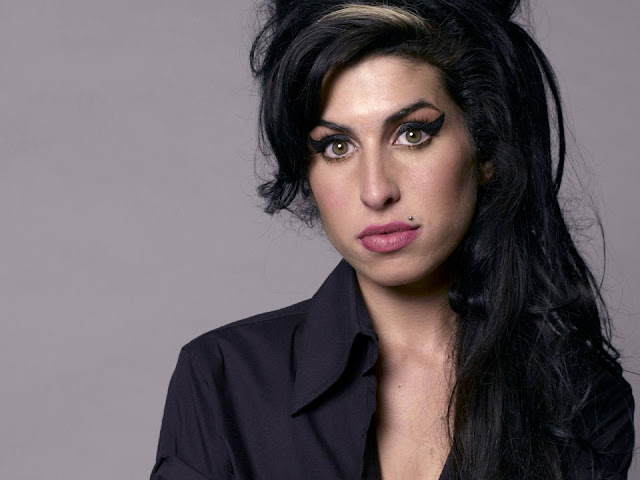
The great jazz singer/songer writer Amy Winehouse
“Amy” which debuted at the Cannes Film Festival in May is an extraordinary exposé of the life of the late Amy Winehouse. There is virtually little relief knowing Winehouse’s short life cyle in the public eye was due to substance addiction, but this documentary reminds us how her career was built on the joy and enchantment of her artistry. British filmmaker Asif Aspadia’s “Amy” was nominated for a Golden Eye Award for best documentary as well as a Queer Palm at the Cannes Film Festival Cannes Film Festival and showcases previously unseen footage of this phenomenal artist.

The documentary starts out like probably many music videologs that trace the career of an emerging artist. It is impossible to see Amy Winehouse as anything but an extremely talented jazz vocalist who was born with talent not luck. She felt best playing in intimate jazz clubs with good musicians. She loved to write songs and was clearly one of the best singer/songwriter jazz vocalists of this century. Her exquisite voice, vocal range and phrasing hit notes with spot on accuracy and emotionally wrenching language, framing familiar episodes in life with an exactitude inspiring international introspection.
Winehouse’s new fans proclaimed their infatuation with that voice and those incredible lyrics. This is the same public that booed her off the stage at the end of her career for failing to sing and who even demanded their money back. It was pay back time for the public that felt they made her. Her refusal to perform in Belgrade can only be seen as an act of defiance and strength for no one listened to her when she said she didn't want to go. "Amy" updates the media picture of this outstanding vocalist and shows how she stood her ground and said no to a large concert she could no longer tolerate as a serious artist.
Amy Winehouse stands her ground and refuses to perform at Belgrade

Tony Bennett confirmed this when he said that Amy Winehouse was one of the great jazz musicians of our time on the order of Elsa Fitzgerald. Shown in the documentary is a beautiful and touching collaboration of Winehouse and Bennett. 

Given substantial room is Amy Winehouse's relationship with her husband Blake Fielder-Civil , a relationship characterized in the documentary as all consuming, temptuous and painful. Fielder-Civil introduced her to heroin and crack and Amy could not be separated from him until he was forcefully incarcerated and later divorced her. According to Fielder-Civil, she did not want the divorce and her signature was forged. By Amy's own admission the relationship was a drug.

Also given ample space is Winehouse's eclectic vintage fashion sense, heavy eyeliner,  and her hairstyle inspired by a fusion of the 60's pop group "The Ronette's" and Brigitte Bardot.

At first we love our artists for the accord that they strike in our experience but as they become successful within the industry model, they become our slaves and wind up dolls. “Amy” well illustrates the modern myth of god/goddess destruction. The artist pulls the strings of our hearts and we become fickle and restless and lose interest waiting for the next sensation. The industry has of course created this fickleness, this throwaway artist society with mythological heroes and heroines, even when they are banished or doomed.

“Amy” makes one wonder how extraordinary it must be for any megastar to not succumb to drugs and alcohol. “Amy” indeed presents a horrifying picture of what success actually looks like, mirrored in the fearful faces of Amy Winehouse as she walks to fame and out of it in her short life. At first stunned at the ignorant questions she is asked as an artist she is later repulsed by the invasion of her privacy by the media.

Almost everyone is a player in this mediated gimmicry—even her father who brings photographers to St Lucia where she becomes drug free and chastises her when two "harmless" tourists asks for a photo with her and she is less than overjoyed.  That one simple photo to her is equal to all the excesses she has suffered since she began winning awards and recognition. Jay Leno and David Lettermen ridicule her drug habit on national television but if they did that to someone with an illness other than addiction they would be shut down. Both are finally going anyway as spent fuel.
We wonder why someone so incredibly talented, such a beautiful unique creative and illuminating young woman can die before our eyes after an inevitable failed comeback as painful as the one planned by Michael Jackson. But the answers are all there in “Amy” of how this could be.

There are no particular culprits, since success is a cunning foe that is propelled by faceless greed and commerce. Artists whose careers are intertwined with commerce pay a heavy price. There is also the truth that Amy Winehouse even before she became famous was a substance abuser with food and alcohol. Her parents, in the documentary, seem clueless that alcoholism was just as important to tackle (though they disagree with how they are presented). Going to rehab, or not going to rehab as the song goes that became her signature song did not seem to sink below the goal just being clean and tackle the underlying issues behind her relapses.

Amy Winehouse was a beautiful soul and there are ample pictures in this brilliant documentary of her upbringing, her first songs with enchanting poetic images in  her ever enlarging career prompted by public demand for more of her. And as the public demanded more of Amy, she began to disappear with increasing regularity. However, it is clear that it was not only a public sacrifice but her support system and her own ignorance of addiction that took her life, despite doctor's warnings. All this is evident in this powerful documentary.

“Amy” shows how the success pendulum cares not for beautiful souls but is a cunning predator that kills with animal instinct the wondrous artists of our world who exist only to enlighten us and ease our every day lives. Thank Amy Winehouse for her gifts, and see in Amy Winehouse a vulnerability that was not strong enough to stand up to the gimmicry and was left unprotected by family, husband, fans and promoters. Amy Winehouse died from alcohol poisoning in July 2011 at the age of 27.  Asif Aspadia dignifies Amy Winehouse who was always worthy of our love.

2013-06-26

Spellbinding debut feature 'Concussion' opens Frameline 37

Stacie Passon and Rose Troche in San Francisco ©Moira Sullivan
The Frameline 37 opening film "Concussion" filled the Castro Theatre to capacity in San Francisco on June 20. On hand were filmmaker Stacie Passon and producer Rose Troche. Troche had been at the Castro 19 years ago as director of the cult classic "Go Fish", and hoped that the experience would be just as good for Passon. Apparently it was, for Passon whipped out a small digital camera to take pictures for her children of the massive audience seated at the Castro waiting to see her film.

"Concussion"will receive its theatrical release in San Francisco in October so the Frameline screening was a peak preview for San Francisco. (Passon and Troche will be featured in an exclusive radio interview for Movie Magazine International San Franciso in the autumn.) This is a smart film with a provocative and captivating script (Passon),  slick edits (Anthony Cupo), brilliant camera work (David Kruta) and a soundtrack that feels Eastern set to Western instruments (composer Barb Morrison and Micki Kaufman,Tommy Mokas).

The film belongs of course to lead actress Robin Weigert who is a master at subtle facial expressions that tell it all without the need for dialogue. An ensemble cast who are equally convincing in their roles supports her.  Weigert plays Abby, a 42-year-old lesbian mom who is ignored by her partner and who doesn’t seem to have much to do. After an accident in which she is hit in the head with a baseball by her son, she decides to redecorate a loft with the help of Justin (Johnathan Tchaikovsky), a young straight man. He has many skills and later sets her up with 'The Girl' (Emily Kinney) who arranges the referrals of rich young college women who are willing to pay for a 'mature situation' with a high scale escort.  Justin somehow even signs up the married Sam (Maggie Siff)  from Abby's community outside New York. 'The Girl' is in law school and just can't get caught, so negotiations are disguised as discussions about home decoration.

Kate (Julie Fain Lawrence) seems oblivious to the needs of her partner and apparently regards her home, job and even her children as possessions. Weigert revealed that when the film opened in Berlin where it won the Teddy Award in February 2013, that she was asked if the film was making a statement about the bourgeoisie. It may sound like a strange question in the USA but it is perfectly relevant with the middle class setup of "Concussion" that does not bring a state of ‘Being’ in the existentialist sense. 

The film is a collaborative effort between Rose Troche (who won the Berlin Teddy Award in 1994 for "Go Fish") and Stacie Passon who were clearly enraptured with each other and the cast and crew on stage. Troche is a clever producer and director who has skillfully stewarded Passon in making a film of such extraordinary completion that it is mind boggling it is a first.  Passon’s 'Being' clearly shows and everyone who worked on the project admitted that the film gelled under her direction.

The subject of the film will be familiar to heterosexual as well as LGBT spectators, since monogamy and the acquisition of wealth by established couples, with or without children, can spin out of control over time, and the unknown in the outside world becomes more and more appealing. This is an intriguing subject, which the film explores with enough space for spectators to pose their own questions.

Frameline has corporate sponsors to maintain its operations, and AT&T picked up the tab for opening night. "Concussion" as a first feature is eligible for an awarrd of $7.500 from Wells Fargo in one of several competitive categories, including the Audience Award.

Frameline is a festival where there are world premieres but films like "Concussion" debuted at one of the A line festivals – Sundance --the others are Toronto, Berlin, Cannes, San Sebastian and Venice. The San Francisco festival is a public festival with a ready-made audience given the expanse of the LGBT community in the area. Some directors don’t like their films to be regarded as a “gay film” in order to reach the widest possible audience. Those who choose Frameline for their world premiere know it is just the right spot. Filmmaker Monika Treut calls Frameline, "the Cannes of LGBT filmmaking". Add to LGBT -- a 'Q' for 'queer'.
Passon and Troche at Frameline 37 ©Moira Sullivan


2012-07-09

Love, or Whatever

Frameline premiere of Love, or Whatever: Gio Messale (producer), Rosser Goodman, Tyler Poelle
Joel Rush as Pete and Tyler Poelle as Corey in "Love, or Whatever"
There were over 200 films at the Frameline36 Film festival in San Francisco that ran June 16-24, the largest LGBT film festival in the world. It has been called the Cannes Film Festival by veteran German filmmaker Monika Treut, and as LA director Rosser Goodman puts it "the grandmother of LGBT film festivals". Rosser loves Frameline and says that all of her films have been launched at the festival such as Holding Trevor, which had its premiere in 2007. 
Rosser's new feature premiered at Frameline on June 20,  Love, or Whatever (USA 2012), a comedy about Corey, a therapist whose lover decides he is bisexual and falls in love with a woman (Jenica Bergere). Corey's lesbian sister Kelsey (Jennifer Elise Cox) moves in when his lover Jon (David Wilson Page) moves out, and he falls in love with Pete, the pizza man. Pete happens to be the handsome Joel Rush, whose character provokes Corey to see beyond the physical into the real person.  
Goodman and leading actor Tyler Poelle who plays Corey sat down at Frameline to talk about their film minutes before they went out on stage to greet 700 spectators who had bought tickets to the sold out screening at the Castro Theater. Poelle comes from the Bay Area and revealed it was “a thrill to be at the festival and with the community he grew up in”.   
Of the film, Poelle says that ”love is complicated and is a universal theme”.  His character is pivotal in showing  interconnections with other players in the story line. As a therapist who tries to see into his clients and support them in their quest for love, the world stands upside down for a moment when his ex boyfriend falls in love with one of his clients, unbeknownst to him, or her. 
“Anyone who watches (Love, or Whatever) will be able to relate to it", says Poelle, “because of the feelings, and what Rosser captures so well is what it feels like to be hurt, what it feels like to fall in love again, what it’s like to start dating again when you think you kind of have your life on lock down”.
Love, or Whatever has something for nearly everyone in the LGBT spectrum.  As Goodman explains , “in developing the script, we wanted to be as inclusive as possible, so we have a bisexual story line, a gay male story line, and there is a lesbian sister. The only thing we don’t have this time is a story representing the trans culture. And, we’ll definitively do that in the next one.”  “The film has a good crossover appeal”, she adds.
Working with Goodman are co-writers Cait Brennan, actress in films such as Itty Bitty Titty Committee, and Dennis Bush, whose plays have received numerous awards at theatre festivals.

Stay tuned for an interview with Rosser Goodman and Tyler Poelle 10pm on the July 18th show of Movie Magazine International. 


(Review published in San Francisco - Examiner.com, July 10, 2012.)

2012-02-12

Whitney Houston: Queen of the Night, "The Bodyguard"

Special to the San Francisco - Examiner.com
February 11, 2012
by Moira Sullivan

Queen of the Night

The Bodyguard (1992) is a timeless memento of vocalist Whitney Houston. It is one of the few films she made in her extraordinary music career.  Others include Forest Whitaker's Waiting to Exhale (1995) and Penny Marshall's The Preacher's Wife (1996), both where Houston was nominated for Image awards for best actress. Her new film Sparkle will be released this year about drug and alcohol abuse in the lives of three sisters who form a successful singing group. In the beginning stages of production for 2013, was a sequel to Waiting to Exhale where Houston would return to play Savannah Jackson.

At it's premiere in 1992, The Bodyguard  opened to negative reviews. The criticism was aimed at the direction  (Mike Jackson), script (Lawrence Kasdan), and film style --but not Houston, and certainly not her mesmerizing performance in the film. She adapted  Linda Ronstadt's cover of "I Will Always Love You" written by Dolly Parton and together with Clive Davis produced the music for the film.  In her phrasing, Houston shows her virtuosity and brilliance as an artist, in a song emulated by young vocalists for years.

The feature is built around pop diva, Rachel Marron (Whitney Houston), who is being stalked by a sadistic killer. The film features elaborate costume changes and stagecraft. Frank Farmer (Kevin Costner) is hired by Marron's manager to protect her but soon finds it hard to resist her charm, even though he has been trained to not respond to people with social etiquette. Marron is a vocalist who does need protection and that is what Farmer does.

The claim that the film was considered a breakthrough for interracial dating is inflated. The relationship between the two is limited since Farmer breaks it off before it even begins, and shows little personal attention to Rachel afterwards. She is, on the other hand, eternally grateful to him for saving her life, which is how the theme song "I Will Always Love You" fits with the narrative. The title song has more do with Rachel Marron's unrequited feelings of love for the man who cannot share her life.

On their one date, Farmer takes Marron to the movies to see The Seven Samurai (1954) by Akira Kurosawa, and afterwards to his home where she picks up his samurai sword. Farmer then takes the sword from her and throws her sheer pink shawl up in the air, which the sword slices like butter. This facile detail represents that Marron is no match for Farmer's raw strength, something which is proven the following morning when he calls the date a mistake. This conquest of a great star, who must be totally subjugated in order for him to protect her, endears him to her forever.

Although The Bodyguard is about the buildup and breakdown of Rachel Marron. a powerful woman who winds up falling for her bodyguard, it is more appropriately a showcase of Whitney Houston and her talents. It features the song that has become most associated with her - "I Will Always Love You", who took it to a level that the song writer never did. In her phrasing, Houston shows her virtuosity and brilliance as an artist, in a song emulated by young vocalists for years.

Whitney, Bobby Brown, Cissy Houston,and Robyn Crawford
According to Houston's high school friend and number one assistant for many years, Robyn Crawford, Whitney had already thought about doing a cover of Dolly Parton's song before Kevin Costner approached her. "She did the movie, she did the music [co-writer of "Queen of the Night"], she did everything", said Crawford, "— and when she was done, she was done. She nailed it. The music supervisor brought her Linda Ronstadt's version of "I Will Always Love You" way before Kevin Costner brought Dolly Parton's version — and she always knew what she could do with it. So when Kevin came in and played it for her and told her he wanted her to sing it for the movie, she said, "Fine." She wasn't much for showing off what she had, except when she had to".

Houston was at the pinnacle of her career when The Bodyguard was made, and even if it isn't the best directed or best written film, it was still a popular centerpiece for the artist.

The Bodyguard shows us the strength and determination that is necessary for a beautiful soul with incredible talent to have a successful career at the expense of a fulfilling personal life. Rachel Marron's temperamental personality as a pop diva is driven by the fact that everyone wants a piece of her. We acquire realistic insights about how life can be for a major vocalist in the public eye, like Houston.

The sad news of Whitney Houston's death February 11, 2012 comes twenty years after The Bodyguard was released, when this brilliant vocalist was only 28.


2011-03-18

Postcards to Maria Schneider

On February 10, Maria Schneider's funeral was held at Èglise Saint-Roch in Paris. She was cremated at Père Lachaise, and her ashes will be scattered at 
Le Rocher de la Vierge in Biarritz.
I was not able to be in Paris, so these photos this spring day in San Francisco at Golden Golden Park, Baker Beach and Stinson Beach are an homage to Maria.