2006-04-30

Udine Far East Film Festival

The Udine Far East Film Festival ran from April 21-29. See Greencine dispatches for the entire festival. CinéFemme especially recommends Ma Liwen: You and Me, a meeting between an elderly woman who was a soldier and rode horses, and a young university student. The contemplative pace of the film and the female characters are exceptional.

If the paucity of Asian films at the Cannes Film Festival gets to you, plan on attending this festival. (This year there are 12 Asian films in Cannes, 73 in Udine). Fest catches the Asian films released between Venice and Cannes, and which miss the crosshairs of Berlin. The festival hopes to double the amount of Asian film to the Venezia- Friuli-Veneto region together with the Venice Film Festival. And director Marco Müller was in attendance to give his nod of approval. The festival organizer is of Europe's leading experts in Chinese literature and who saw to it that Hayao Miyazaki came to Italy to accept a Golden Lion for Lifetime Achievement last year in Venice.

Asian Cannes 2006
Competition: Summer Palace, Lou Ye
Quinzaine des realizateurs: The Host, Bong Joon-ho,Yureru, Nishikawa MiwaSepohon Rambutan Indah Kepunyaanku Di Tanjung Rambutan, U-Wei bin HajiSaari
Un Certain regard: Re-cycle, Oxide Pang Chun & Danny Pang Gwai Wik, Luxury Car, Wang Chao, The Unforgiven, Yoon Jong-bin, Serambi, Garin Nugroho
Midnight screening: Election 2, Johnnie To, Guisi, Su Chao-pin
Cannes Classics: Shi Si Nu Ying Hao, Kang Cheng, Kaze No Tani No Naushika, Hayao Miyazaki
Photograph ©Moira Sullivan


2006-04-13

Jane Fonda back in Stockholm

©Moira Sullivan
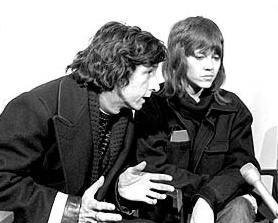
Jane Fonda was in Stockholm during the antiwar demonstrations against the Vietnam war in the early 1970's. Then in 1989 to promote the film Old Gringo. On March 18-22 she came again to promote her book, My Life So Far, and to introduce a retrospective of her films at the Swedish Film Institute Cinemateque. She marvelled at how Swedish films are paid for by a percentage of the box office, and enthusiastically presented On Golden Pond, the last film her father Henry Fonda made. She starred as his daughter, and recalled some of the problematic issues of their relationship on screen. Katherine Hepburn played Jane's mother who tried to smooth the way between them, both offscreen and onscreen. Both Henry and Katherine won Oscars for their roles and Fonda recalled how Katherine remarked, " you'll never catch me now!"
©Moira Sullivan 
A huge crowd of primarily middle aged women filled the Stockholm Kulturhuset to hear Jane Fonda speak about her life and reveal anecdotes that are found in her best selling book, translated into Swedish. The actress was interviewed by Stina Dabrowski, who had visited Fonda in her apartment in Atlanta a few weeks before. Dabrowski chose to ask questions about Fonda's personal life, who is more than willing that people know the intimate details of failed marriages and her own recovery from bulimia and alcoholism. Dabrowski was also asked by Fonda about her own failed marriage, which she declined to discuss.
The ultra-professional actor revealed earlier at a press conference that she isn't asked to star in so many movies, relating factors of modern day Hollywood production with huge budgets and so much tied into marketing and the demands for instant box office success. Fonda recalled how young actors were given a chance to have their films find a market. But Fonda is certainly in top form in her third act. Should she come to the attention of a European director she wouldn't mind it. Charlotte Rampling, Jane Birkin, Catherine Deneuve and Jeanne Moreau still work, and Jane is fluent in French. But one French director she would never work again with is Jean Luc Godard. She regarded his "generically political" film, made by a Maoist", Tout Va Bien as horrible. Although she enjoyed working with Yves Montand, and highly regarded Jean Seberg's work with Godard, she realized he was using her for his own agenda. When she tried to back out, his "henchman" Gorin physically threatened her. Godard's write off was Letter to Jane, a film she "doesn't have a clue about " as far as what he wanted to say.

Fonda enjoyed her success in Monster in Law, which she calls a 'popcorn movie', and wouldn't mind a sequel. But she doesn't have the time to produce it, so someone else will have to.

Regarding her relationship to Sweden she recalled how she came to strategize with antiwar demonstrators in Stockholm in the 1970s. She was proud of the country and the late Olof Palme. Since her visit in 1989 she says revealed that she is feeling much better as "a whole person". Mary Hershberger's Jane Fonda’s War: A Political Biography of an Anti-war Icon illuminates Fonda's work with antiwar resisters during the very unpopular war. The study reveals how Fonda through Nixon propaganda was used as a scapegoat to chastize the antiwar movement. On a personal scale, in My Life So Far , Fonda revealed how antiwar activist Tom Hayden belittled her achievements which ultimately let to their divorce.

Fonda admitted to having a low profile regarding the Iraq war and said there were others out there now to do the job. Her choice of best film at the Academy Awards was Syriana, a film that was not nominated, though George Clooney won best supporting actor, and she loves his work.

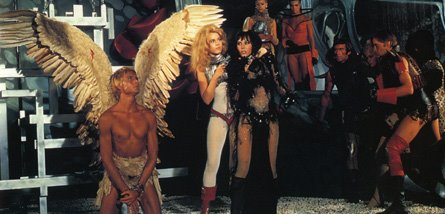
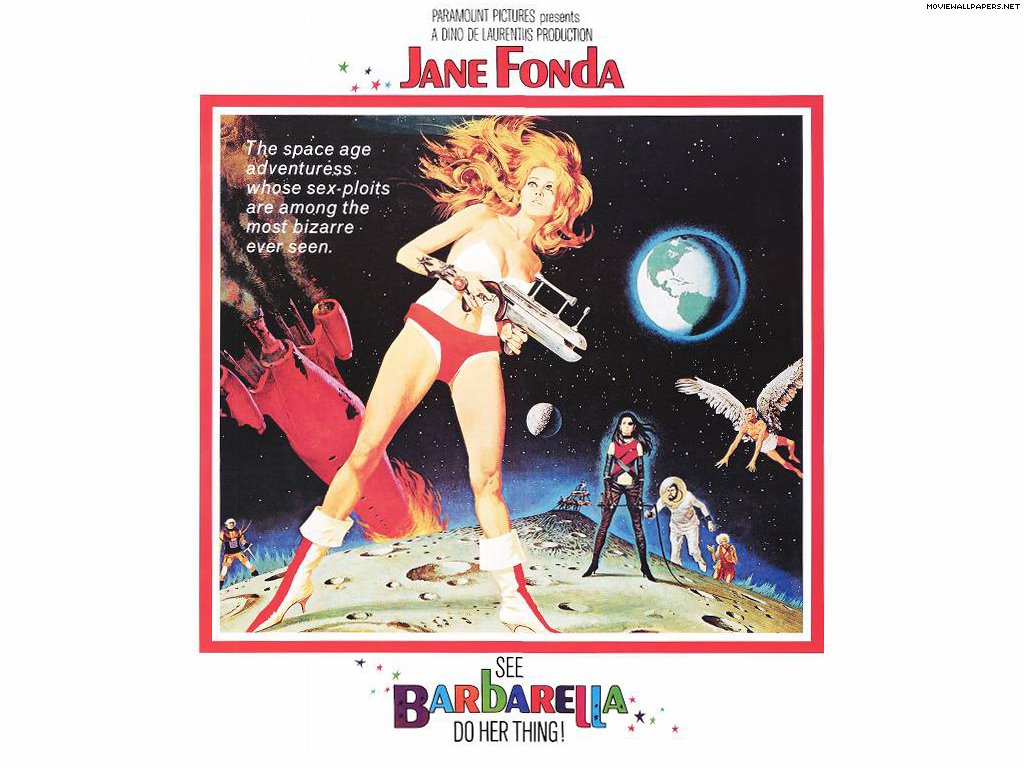
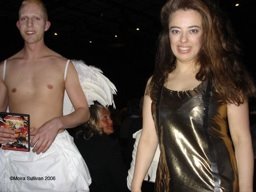
Two young Stockholm sci-fi enthusiasts, Erik Dalen and Helena Sterner dressed as Barbarella and Pygar came to the book signing dressed up straight from the cult science fiction film directed by Fonda's ex husband, the late Roger Vadim. An astonished Jane exclaimed, but "they didn't have piercings back then", when she noted the adorned chest of the Swedish Pygar. As true
Barbarellian aficionados, Erik and Helena were well versed in the intricacies of the film. Such as the remarks of "The Great Tyrant"(Brian Jones real life girlfriend Anita Pallenberg) to Barbarella - "Hello Pretty Pretty"? "I didn't like those biting dolls," revealed Helena. "Did you know that the pop group Duran - Duran was named for the film?" "Of course", replied Erik.

©Moira Sullivan
Jane revealed her fantasy of a 21st century Barbarella in neutral Sweden, which she called "liberated territory", acclaiming her peace making mission, then as now.

2006-03-19

Jane Birkin at Créteil Films de Femmes

Jane Birkin is perhaps best known for jumping up and down on David Hemmings bed in Antonioni's Blowup (1966) as a teenage groupie. But when the famous photographer Hemmings plays takes her fawning serious she realizes the game is too rough for her. Later she is to star opposite singer/songwriter Serge Gainbourg in Je t’aime moi non plus (1969) - also a legendary pop hit - and marries him in real life. Jacques Rivette puts her range of acting talents to use in L'Amour Par Terre (1983) opposite Geraldine Chaplin, a three hour spectacle of young actors commisioned to perform theater in the elaborate home of the wealthy Roquemaure. Rolled up shirt sleeves, roomy Manchester slacks and slippers, she exemplifies the finess of androgyny that makes her perfect for roles in films like Kung Fu Master (1987) by Agnès Varda. Now at 60 Birkin has cut a new CD using material from songwriters such as Neil Hannon, The Divine Comedy, The Magic Numbers, Beth Gibbons, and Rufus Wainwright. Fictions will be released March 20 by one of the most versatile Francophiles of the screen.
Birkin was honored with a special retrospective at the 28th Créteil International Film Festival (March 10-19), sporting what else? Rolled up shirt sleeves and roomy slacks. For the Soirée Gala on March 11th, she selected Jacques Doillon's La Pirate (1984) - a film where she was allowed to play a "plain Jane".

2006-03-12

Long before the Oscars were the BAFTA's--and they chose Brokeback Mountain!

BAFTA's , February 19, 2006
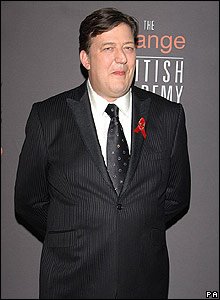
It was a night of surprises, an excellent, gracious and witty host - Stephen Fry who starred in Wilde (1997), as Oscar Wilde. It was also a night to thank George Clooney for stirring up the political volume in film. The highest honor went to producer Lord David Puttnam behind films like The Killing Fields, and Chariots of Fire,with Ben Cross sitting in the audience. Cross starred opposite Ian Charleson in Chariots of Fire (1981) - a film about "two men chasing dreams of glory" at the 1924 Olympics. Charleson died of AIDS in 1990. Putnam applauded the work of George Clooney for themes that had changed the industry in a year – probably the best accolade of the evening.

But above all it was a nite for Brokeback Mountain--best script, best adapted screenplay , best supporting actor.

"Its not a gay cowboy film", quipped the producer of Brokeback Mountain upon receiving the award for best film. "Its a gay shepard film!" Jake Gyllenhaal got his just rewards for best supporting actor. Jake reports in Premiere last month how hard it was to initiate 'the intimacy' in the film, but not when Ledger and he were wrestling. After all sports are perfectly acceptable homosocial encounters - for spectators and players alike. Observe the fascination for the Olympics. So, if 'love is a force of nature', as the film poster states, why not nominate both actors? The Brits did!

Fry's jokes went over well, many about the handsome men in the room and on stage. The awards ceremony was polished and intelligent. Tributes to people in the industry who had passed away was very well made -- with clips from films of among others, Shelley Winters, Sir John Miles and Richard Pryor.

Wallace and Gromit: the Curse of the Were Rabbit won best British film. The Constant Gardener, nominated for ten awards took home one award. The awards caused a stir the next day, how can we not reward our own? Not realizing that is exactly what Hollywood would do a couple of weeks later. Cheers to the Brits!

"I'm not a lesbian but my girlfriend is...."

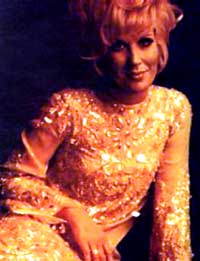
Biopic on the late vocalist Dusty Springfield in the works, directed by Ang Lee. Charlize Theron will be cast as Springfield and opposite, as the PR goes, Springfield's lesbian lover Kate Moss. So what does that make Springfield? Remember that T-shirt "I'm not a lesbian but my girlfriend is". Here we go again. Marketing for an Ang Lee film about what it's not about....
Springfield biopic
Ang Lee's new film cast

Brokeback Tie-Ins?

From the beginning Brokeback gained art house cult momentum from its Golden Lion at Venice to its opening in far less theaters than King Kong, but holding its own enough to surpass the Kong box office based on its exhibition availabilities. Now the film has moved into popular culture with auctions, music and advertising--that are not your usual 'tie-ins'.

This is an amazing phenomena to witness. I disagree that it has 'perked up' heterosexual interet in gay relationships. It reveals the extent of a covert homosexual culture forced underground for the prejudices and hate crimes depicted in 1960's middle America but are rampant everywhere today.
Pop Cult Brokeback
Quote:
"Brokeback" shirts go for more than $100k
The eBay auction of the two shirts worn by Heath Ledger and Jake Gyllenhall in "Brokeback Mountain" closed Sunday afternoon. The winning bid? $101,100.51!

The shirts were won by Tom Gregory, who placed the winning bid about 10 minutes before the auction closed. Gregory told PlanetOut he was thrilled that he won the auction, but explained his euphoria on a broader level. "The shirts represent such a significant moment in the history of film," Gregory said. "And when you see the shirts together in the closet in the film, it's an extraordinary moment for gay people. You just . . . sigh."

Brokeback auction

White Woman, King Kong

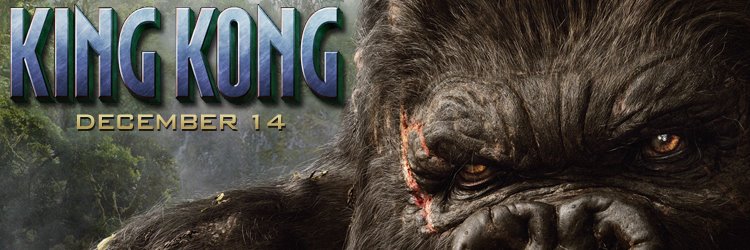
We all knew it was going to win something--visual. Thrilling dinosaur matches with King Kong, giant sucking insects, flying creatures which compel. Otherwise, why do a King Kong film now? The theme of the film, according to scriptwriter Jackson: "beauty destroyed the beast. The day she met him, he was a dead "man", captivated". Doesn't really explain why make a Kong film NOW, though.

A white woman esteemed by a gorilla. A white woman in a white dress walking through the streets of New York in 0 degree weather to find her King (Kong). A group of white men, (one) white woman , (one) Asian man and (one) black man on a boat to Skull Island? Spoilers: the black and Asian man die first. Next, a group of spirit possessed black islanders are subdued by the militarism of a ship's primarily white crew and captain? Why now? Why Kong?

I do not mean that the film is 'racist'. It skillfully uses race tropes, primarily white and black. By looking at how these tropes are used we can get a better sense of images are endowed in film , particularly images of 'white' people. Who gets contrasted against these seemingly 'normative' images? De-mythologizing, deconstructing "whiteness".

Kong also 'capitalizes' on macho gender roles. Ann does cartwheels to impress Kong, and all he can come back with is knocking her down over and over which gives him a real chuckle. When she challenges him, he feels emasculated, pounds his chest and fists and gets hit with a rock that falls on him from his rage attack. After that, she's gotten to him, and he's captive. Oh boy, how infantile can the scriptwriters get. Or casting - Jack Black could play Orson Welles, if he wasn't such a bad actor.

And have to agree that Kong gave Jackson the opportunity to work with the special effects of Lord of the Rings, and all that dinosaur flesh rolling over and over, with safty insects sucking up the men provide plenty of material.

Its impossible to ignore the racial tropes, its so obvious, and since Kong has been recycled many times, trotting out a new version exposes the story for these crystallized structures. What comes to mind when I watch this movie is film professor ( University of Warwick) Richard Dyer's masterful study White, on the representation of white in film, and the history of 'white' in culture. From Richard Dyer's White:

Quote:
White people are not literally or symbolically white; nor are they uniquely virtuous and pure. Racial imagery and racial representation are central to the organisation of the contemporary world but, while there are many studies of images of black and Asian people, whiteness is an invisible racial position. At the level of racial representation, whites are not of a certain race. They are just the human race, a 'colour' against which other ethnicities are always examined. In White , Richard Dyer looks beyond the apparent unremarkability of whiteness and argues for the importance of analysing images of white people. Dyer traces the representation of whiteness by whites in Western visual culture, focusing on the mass media of photography, advertising, fine art, cinema and television. Dyer examines the representation of whiteness and the white body in the contexts of Christianity, 'race' and colonialism and, in a series of absorbing case studies, he discusses the representations of whiteness in muscle-man action cinema, from Italian 'peplum' movies to the Tarzan and Rambo series; shows the construction of whiteness in photography and cinema in the lighting of white and black faces, and analyses the representation of white women in end-of-empire fictions such as The Jewel in the Crown , and traces the disturbing association of whiteness with death, in vampire narratives and dystopian films such as Blade Runner and the Aliens trilogy.


The part above about 'lighting' whiteness is especially true for Jackson's new film. Note how Watts is lit in the scenes where her whiteness is constrasted with the darkness of Skull Island, and islanders. And the scene where she finds Kong in NYC, wearing only a white gown. And in the end with Kong gone, its time to return to 'her own kind' with an embrace of Brody. No contrasts needed.

Regarding having new heights to the new tale, a modern Kong may have scaled the WTC, but in the original story, this was the Great Depression, and the Empire State Building was the tallest edifice to challenge Kong. Opening scenes of the film about time period promised something that just never was delivered. Jackson just got sucked into the story, its his kind of story anyway. He made it his kind of story.